
A readable video image and automatic number plate recognition solve different tasks. An LPR camera identifies a vehicle by its plate so that a compatible access or operational system can work with that information. The installation must be designed around the actual entrance lane.
26 October 2026 · CAMEKO / HEMAK
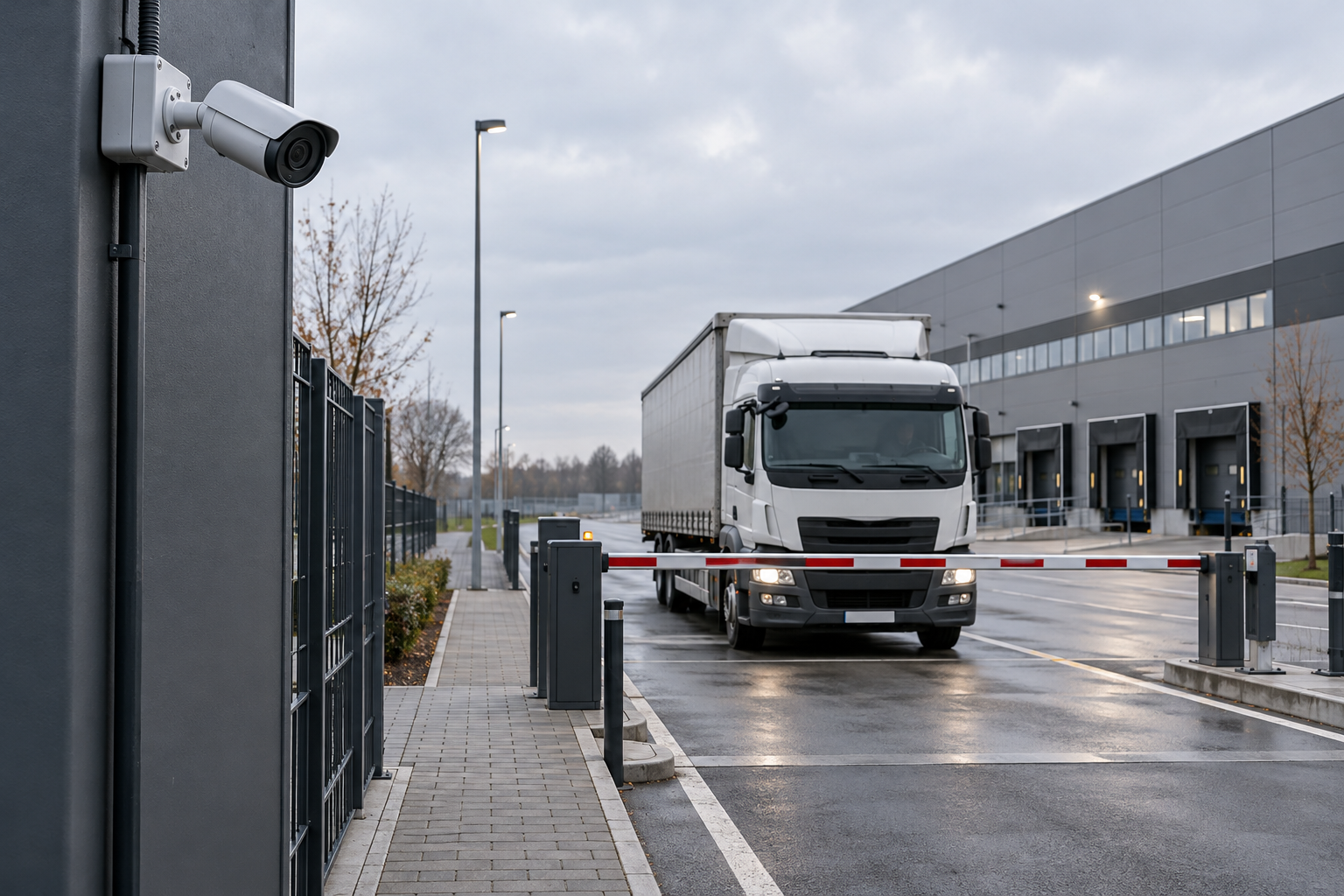
AI-generated illustration. Model situation, not a customer installation or an exact product photograph.
LPR is useful at warehouse entrances, industrial gates, company parking areas and road weighbridges. Instead of manually entering a plate for every arrival, an operator can work with recognised vehicle records. A site can also use authorised and blocked vehicle lists when the selected access configuration supports them.
Start with a concrete task: identify arriving vehicles, find a previous visit or connect a vehicle with a weighing event. These are related tasks, but they do not require exactly the same camera placement or software.
CAMEKO AI LPR Bullet Camera performs recognition in the camera. Its published features include vehicle attributes, direction of travel, plate searching and support for standalone barrier control. Interfaces and alarm connections depend on the version. A barrier must therefore be selected and connected as part of the project; fitting a camera alone does not make an entrance automatic.
An overview camera can provide the context around the vehicle while a dedicated LPR view concentrates on the plate. Plate recognition is also different from reading container identification numbers: that task needs an appropriate OCR configuration.
Survey each traffic lane and the intended stopping or reading position. Check the plate angle, camera mounting height, vehicle approach, lighting and headlight glare. Test the intended setup with the vehicle types that actually use the site, including day and night conditions.
Also confirm electrical supply, network cabling, the selected camera interface and the access system connection. Plan what happens when a plate is dirty, hidden or not recognised. A manual operator procedure remains useful; no installation should be described as recognising every vehicle in all conditions.
When a site weighs vehicles, identification and a contextual photograph can help relate a visit to a weighing event. HEMAK can assess a project-specific SCALIS integration through compatible interfaces, including barrier or traffic-light control where required. This is an integration proposal, not an automatic feature of every camera or every weighbridge.
Prepare a simple flow before requesting a proposal: vehicle arrival, identification, weighing, permission to leave and handling of an unread plate. That makes it easier to specify the required cameras and responsibilities.
No. A camera may show a plate in an image without supporting automated recognition. Confirm the actual LPR function and configuration.
Only after the compatible interfaces, access rules and barrier connection have been confirmed and configured.
A photograph or plan of the entrance, lane count, vehicle types, operating hours and a description of the access or weighing system you want to connect.
Explore more CAMEKO AREA functions before planning your installation.
Where PTZ cameras help monitor industrial sites, how presets and tracking work, and why fixed overview cameras still matter. A practical CAMEKO AREA guide.
Choose an NVR by camera channels, PoE, bandwidth and storage needs. Understand recording modes, retention and compatibility for a CAMEKO AREA installation.


