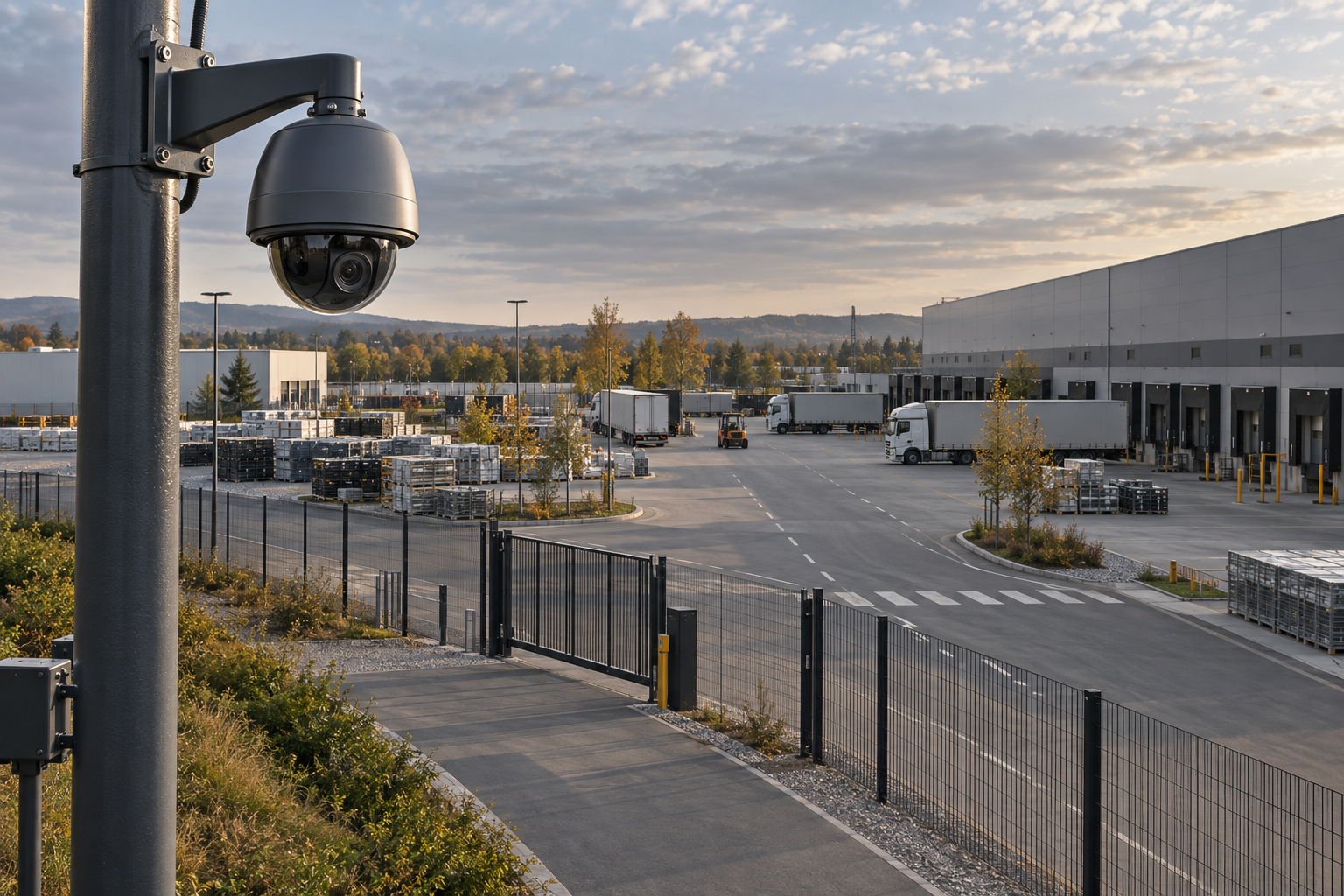
Where does a PTZ camera help?
Typical applications include warehouse yards, industrial perimeters, internal traffic routes and logistics junctions. An operator may first notice an event in an overview and then use a PTZ camera to inspect it more closely. The right position depends on the actual sightlines, obstacles and areas of interest.
CAMEKO AREA includes different PTZ formats. Compact installations and extensive outdoor areas have different mounting and coverage requirements. Choose a model against a site plan rather than choosing by the largest zoom value alone.
Pan, tilt, optical zoom and preset positions
Pan means horizontal rotation; tilt changes the vertical viewing angle. Optical zoom changes the lens view to inspect a smaller area in more detail. Preset positions let the camera return to defined views, while a patrol can move between configured positions.
CAMEKO AI PTZ 36X/42X lists continuous rotation, preset positions and patrols among its capabilities. The available optical zoom, resolution and other parameters depend on the selected version. A zoom or illumination figure alone is not a promise that a face or number plate can be identified at that distance.
What does automatic tracking mean?
Automatic PTZ tracking can follow a detected target within the supported camera configuration. AI event functions and metadata depend on the model, firmware and settings. The scene still needs testing: passing vehicles, occlusion, vegetation, light changes and mounting position can affect what the camera sees.
Agree what should trigger attention and how an operator responds. Tracking is a camera assistance function, not a replacement for site procedures or a guarantee that every relevant event will be captured.
Why combine PTZ and fixed overview cameras?
When a PTZ camera turns toward one event, its previous view is no longer the same. A fixed camera can keep watching a gate, loading area or fence section while the PTZ inspects another part of the yard. Coverage should therefore be checked for the whole system, including times when the camera is zoomed in.
Plan mounting, power, networking, lighting and maintenance access. If video must be reviewed later, confirm the NVR recording setup and retention requirements as a separate part of the design.
Frequently asked questions
Can one PTZ camera replace all cameras around a site?
Do not assume so. Its view changes with its position, so simultaneous coverage of important areas must be checked.
Is a PTZ camera the same as a 360° vehicle camera system?
No. A moving site camera and a multi-camera surround view for a vehicle serve different purposes.
What should I provide for a design?
A site plan, mounting options, the locations you need to observe, operating conditions and a description of how events should be handled.